
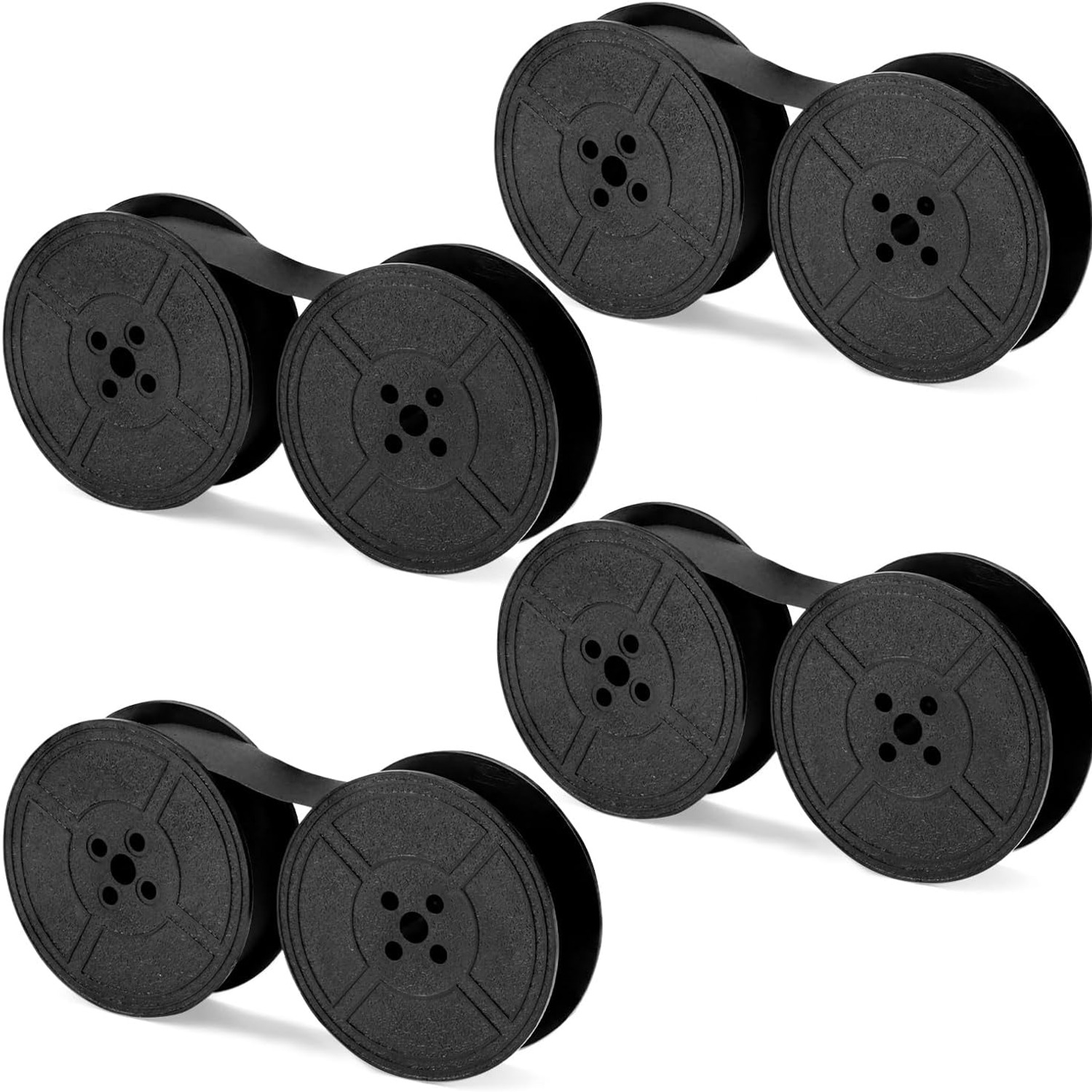
The complete guide
Typewriter Ribbon Buying Guide, Choosing And Fitting A Twin Spool Replacement
The problem with a tired ribbon
A typewriter does not fail dramatically. It fades. One day the letters look a bit light, so you press harder. A week later the middle of each character has gone hollow. Then the top line of the page prints fine and the bottom half looks like a rubbing taken off a gravestone. Nothing is broken. The ribbon has simply run out of ink.
That is the most common reason a working machine ends up in a cupboard. The owner cannot find a replacement ribbon, assumes the typewriter is obsolete, and the whole thing gets put away. It is a shame, because a ribbon is a consumable, the same as ink in a pen. You are meant to change it. Buying a few pairs at once means the day the type fades, you fix it in two minutes instead of spending a fortnight searching.
How a typewriter ribbon actually works
The mechanism is lovely and simple. The ribbon is a long strip of inked fabric wound between two spools. One spool feeds, the other takes up. As you type, a small arm called the vibrator lifts the ribbon up in front of the paper at the exact moment the typebar swings forward. The typebar hits the ribbon, the ribbon presses against the paper, and ink transfers in the shape of the letter.
Because the tape only advances a fraction with each strike, the same stretch gets reused many times before it moves past. When the feed spool empties, most machines reverse direction and run the tape back the other way, using the untouched lower band. That is why a good ribbon seems to go on and on, then suddenly stops delivering once both passes are spent.
The tape here is nylon fabric, half an inch (13 mm) wide. The maker chose nylon for clean, crisp printing, and it is a common ribbon fabric because it holds ink and keeps character edges sharp. A loosely woven or worn ribbon spreads the ink sideways and your letters get fuzzy.
Black ink, and a note on red
This is a black ribbon. The product name says black, the maker's specification says black, and every photo shows a plain black tape. One line in the maker's listing mentions black and red ink, so it is worth being clear: don't buy this pack expecting a red band. If you want two colours, choose a ribbon that is plainly sold as black and red.
For most typing that is no loss. Letters, drafts, envelopes, labels and forms are all black-ink jobs. Your typewriter's colour selector, the small lever or dial near the keyboard that raises or lowers the vibrator, can stay on the black setting.
Some machines also have a stencil setting on the same lever, which drops the ribbon out of the way entirely so the typebars hit the paper directly. That is for cutting stencils, not for everyday typing, and you will get blank pages if you leave the lever there by accident.
Will it fit your machine?
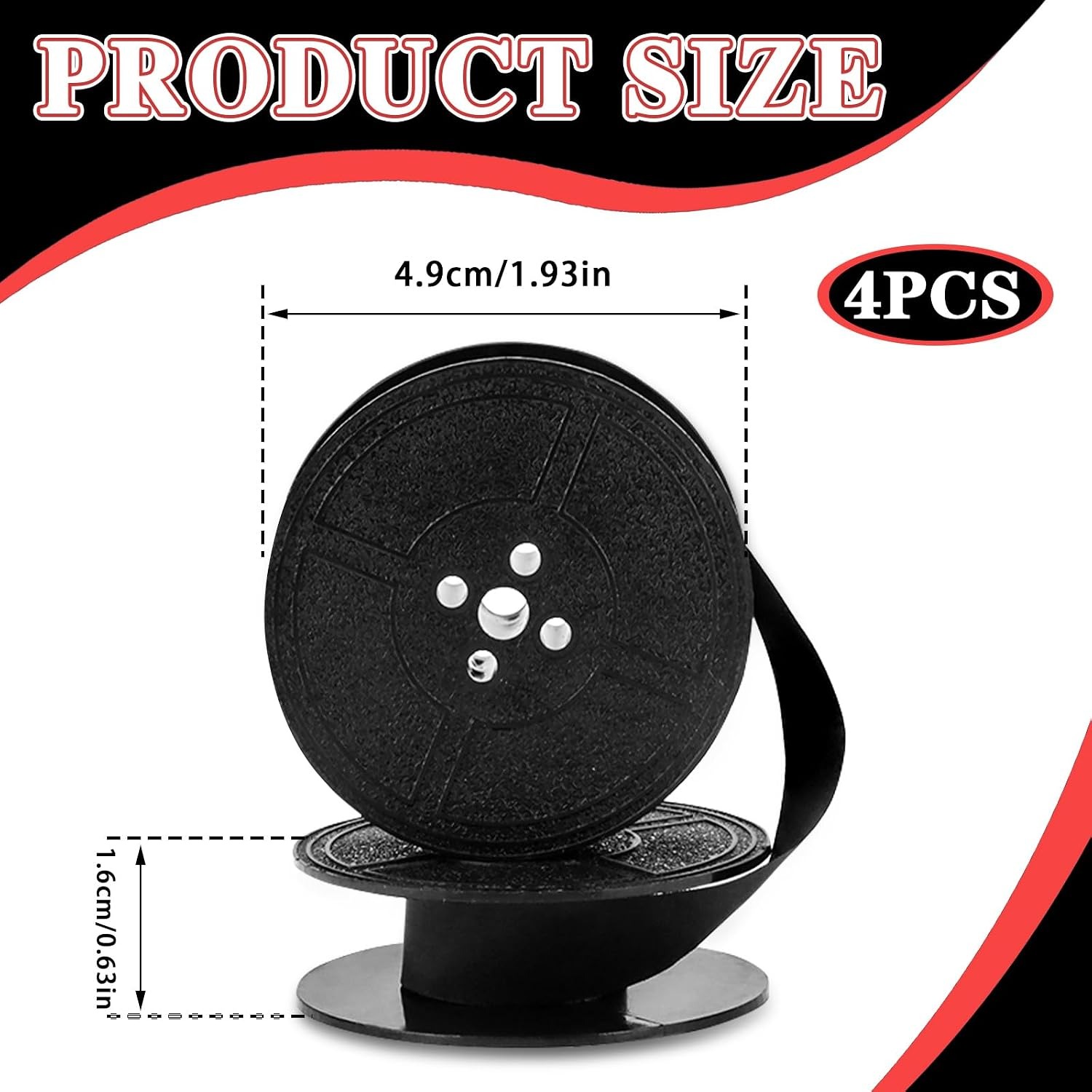
This is the question that matters, and the honest answer is measure first. The format here is a twin spool pair with half-inch (13 mm) tape. That combination covers a very wide range of manual portables and desktop typewriters, which is why it gets described as universal. It is not a promise about any particular named model.
Here is what to check before you order. Open the ribbon cover and look at what is inside. If you see two round spools sitting on posts, you have a twin spool machine. If you see a single sealed plastic unit that clicks in and out, you have a cartridge machine and you need a cartridge instead.
Next, pull the ribbon out slightly and measure the tape against a ruler. Half an inch, about 12.7 mm, is the match. Quarter inch and wider ribbons exist, mostly on specialised machines.
Finally, look at the spools themselves. Some older typewriters use a spool with a particular hub shape or a notch that engages a drive pin. If yours is unusual, you are not stuck. Plenty of people buy ribbon for the tape alone and wind it onto their original spools. It takes patience and clean hands, but it works, and it is how most collectors keep rare machines running.
Fitting a new pair
Set yourself up before you start. Lay a sheet of newspaper on the desk, have a paper towel handy, and take a photo of the existing ribbon path with your phone. That photo will save you if the threading looks confusing once the old ribbon is out.
Wind the remaining ribbon onto one spool so nothing trails loose. Lift both spools off their posts and set them aside. Place the new pair on the posts, making sure each one seats fully and turns freely. Then thread the tape outward from the feed spool, through the ribbon guide, across the vibrator at the front, through the second guide and onto the take-up spool. Most spools have a small hook or slot to hold the end.
Turn the take-up spool by hand a few times to pull the tape taut. Check that the ribbon sits in the guides and not above or below them. Then type a line of test characters. If the letters are dark and even, you are done. If the ribbon is not advancing, the usual culprit is a spool that is not properly seated or a tape end that slipped off its hook.
Handle the tape by the spool edges rather than the fabric. Fresh ink transfers readily to fingers and from there to paper, shirt cuffs and door handles.
Who this pack suits
Four pairs is a sensible quantity for someone who types regularly. A writer working through drafts will get through ribbons steadily. A small office still using a typewriter for forms and envelopes will too.
It also suits anyone who has just bought a second-hand machine. Almost every typewriter that comes out of a garage or an auction has a dried ribbon in it, and the first job is always a replacement. Having spares means you can test the machine properly rather than wondering whether the weak print is the ribbon or the mechanism.
Collectors with several machines can spread the four pairs across them. And if you are typing for the look of it, on labels, tags, place cards or craft projects, you want strong ink, so changing ribbons more often is part of the job.
Storage and care
Ink dries when it is exposed to heat, air and light. Leave the spares sealed in their packaging and keep them in a drawer or cupboard rather than on a sunny windowsill. A cool, dry spot is all you need.
Keep your typewriter covered between sessions. Dust that lands on a ribbon gets pressed into the paper along with the ink and leaves speckles. If the machine lives on a desk, a cover or a case is worth it.
Wash your hands after fitting a ribbon, before you touch paper. And if ink does get onto a page, do not rub it. Blot it and leave it.
The short version
A ribbon is a consumable, not a repair. When your type fades, you change it, and the machine is as good as it was before. This pack gives you four pairs of half-inch (13 mm) nylon fabric tape on twin spools, in black ink.
Measure your current ribbon before ordering, check that your machine uses two spools rather than a cartridge, and you will know straight away whether this is the right format. Fitting takes a couple of minutes and needs no tools or power. Store the spares somewhere cool and dark, and you will have sharp, dark type available whenever you sit down to write.